

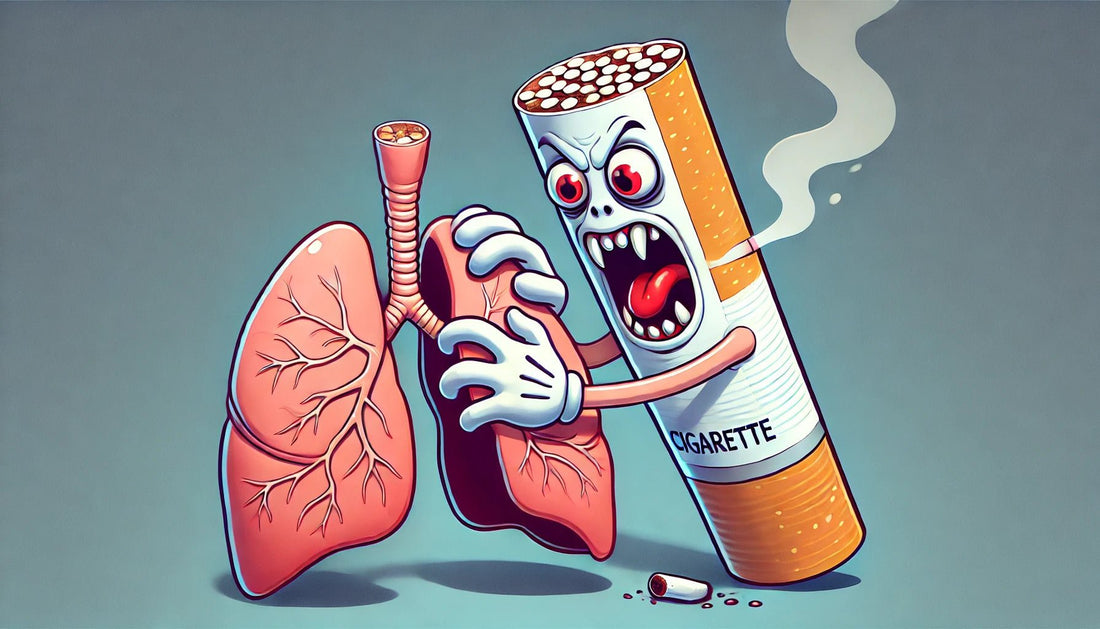
Nicotine as secret self-medication for ADHD?
ADHD and nicotine – a dangerous mix. People with ADHD are more likely to turn to nicotine. Why is this? And what dangers does it pose?
ADHD, unfortunately still known as "attention deficit/hyperactivity disorder ," affects millions of people worldwide. It is a neurobiological abnormality/neurodivergence characterized by difficulty concentrating, impulsivity, and hyperactivity. On the other hand, it also exhibits great strengths such as creativity, resourcefulness, loyalty, networked thinking, etc., which we have described in detail elsewhere.
Often, there's more living fire (passion) than smoke (or mental fog) . Unfortunately, there's clear evidence that people with ADHD are more likely to consume nicotine. So, smoking, vaping, or "laying" snus. But why is that? And what are the consequences?

Nicotine and the brain in ADHD: "Look, I can help you..."
Nicotine works in the brain by influencing the neurotransmitter dopamine. Dopamine is a messenger substance that is responsible, among other things, for regulating attention and reward . People with ADHD usually have lower dopamine levels, which leads to the typical symptoms: poor concentration, inner restlessness, and a tendency toward impulsive behavior. Anyone who has ever taken an ADHD medication (such as Ritalin) without having ADHD will understand this connection. What makes us calm often leads to nervousness, an increased urge to move, insomnia, or even palpitations in neurotypical people. "Neuros" are then "too fast on the gas" on Ritalin, whereas we ADHD sufferers (in the civilized, leisurely everyday life of industrialized countries) need a certain amount of dopamine to even reach their level.
Nicotine can temporarily increase dopamine levels, thus creating a feeling of focus and calm. Even those without ADHD know this well . And it's exactly what people with ADHD are constantly seeking. However, the effect of smoking is deceptive. Nicotine addiction develops quickly, and the body demands ever-increasing doses to achieve the same effect. This leads to a dangerous spiral that's difficult to break.

After the calm comes the crash...
For many people with ADHD, nicotine is simply a form of self-medication—due to the connections discussed above. They report that smoking or consuming nicotine-containing products helps them concentrate and control their impulsiveness. Indeed, studies have shown that people with ADHD have up to a 50% higher risk of becoming addicted to nicotine than people without neurodivergence.
This self-medication "with the drug from the kiosk" may work in the short term, but in the long run, the negative consequences outweigh the benefits. The health risks of nicotine consumption are well documented. They range from respiratory diseases and cardiovascular problems to an increased risk of cancer. Nicotine addiction is not only harmful to health but often worsens ADHD symptoms. The initial relief quickly gives way to new problems: withdrawal symptoms, increased restlessness—and the feeling of being unable to function without nicotine.
Nicotine doesn't come anywhere close to the effectiveness of ADHD medications. It's less potent, shorter-lasting, and has more severe side effects (Ritalin, despite its often negative reputation, is one of the longest-researched, no longer patented medications—70 years).

Hard Facts from the University of Zurich: ADHD sufferers and the annoying smoke
Below is a summary of the study "ADHD and Tobacco Consumption in Adults..." (2006, University of Zurich) by Dr. Anja Frei. It succinctly addresses many issues that may be of burning interest to you as parents...
- 55% of adult ADHD sufferers in the study smoke, compared to 31% in the general Swiss population.
- People with ADHD start smoking regularly earlier and have higher daily cigarette consumption and a stronger nicotine dependence.
- Many people with ADHD effectively use smoking as a form of self-medication because nicotine acts as a dopamine agonist similar to ADHD medication.
- Nicotine withdrawal symptoms often resemble ADHD symptoms, leading to increased relapse rates.
- The willingness to quit is high among people with ADHD and comparable to the general population, but they often have difficulty quitting smoking due to severe withdrawal symptoms.
- The study emphasizes the need for specific prevention strategies for those affected by ADHD, including improved education for teachers, therapists, and parents.
- For secondary tobacco prevention, medication support to alleviate withdrawal symptoms in people with ADHD is particularly important.

Natural dopamine sources as an alternative
There are ways to naturally increase dopamine levels without resorting to medication or nicotine. In particular, you can completely replace the (already modest) effects of tobacco with these habits:
Exercise and sport : Physical activity is one of the most effective ways to boost dopamine levels. Even 30 minutes of moderate exercise a day can noticeably increase dopamine levels. Endurance sports like running or swimming, in particular, have a positive effect on dopamine production. Yoga is also great.
Diet : Certain foods can stimulate dopamine production. These include protein-rich foods like eggs, fish, and legumes (beans, lentils, chickpeas, etc.). Fruits like bananas and berries, which are rich in antioxidants, also support dopamine levels. Dietary supplements can also help, but a balanced diet should always be a priority.
Adequate sleep : Lack of sleep can lower dopamine levels and worsen ADHD symptoms. A regular sleep schedule and sufficient sleep (7–9 hours per night) are therefore crucial for maintaining the balance of neurotransmitters in the brain. If sleep deprivation is a daily occurrence, at least seek refuge, relaxation, and quiet/music .
Mindfulness, breathing exercises, and meditation : These techniques promote relaxation and can help increase dopamine levels. Regular meditation reduces stress levels and supports the production of dopamine and other positive neurotransmitters (e.g., serotonin).

Excursus: The nasty hypocrisy of the tobacco industry
Another important aspect related to ADHD and nicotine is the role of the tobacco industry. For decades, the industry has deliberately sought to promote nicotine consumption—often in highly manipulative ways. One infamous example is the "Torches of Freedom" campaign from the 1920s , which encouraged women to smoke cigarettes as a symbol of emancipation and independence. This occurred at a time when smoking was still heavily stigmatized by women. The tobacco industry cleverly exploited social trends to tap into a new consumer group, regardless of the health risks. The brown filter on most cigarettes? The lipstick imprint on it is less obtrusive than on the white ones.
But the tobacco industry's hypocrisy goes far beyond historical marketing gimmicks. As recently as the 2000s, the industry vehemently denied in court cases that there was a link between smoking and lung cancer. In one notorious case, the CEOs of the largest tobacco companies were forced to testify before the U.S. Congress. They denied under oath that nicotine is addictive and that smoking cigarettes is harmful to health. This is what "monsters" look like. Only after massive public and legal pressure, such as major class-action lawsuits by U.S. states, was the tobacco industry finally forced to abandon its position – and pay substantial damages ( good film about it here ).

A current example of the tobacco industry's manipulative tactics is the trend toward vaping. Of particular concern is the marketing of sweet flavors specifically designed to appeal to younger consumers. Under the guise of vaping as a safer alternative to smoking (perhaps, but more addictive!), nicotine-containing liquids are offered in flavors such as strawberry, bubble gum, or chocolate. These flavors are particularly appealing to adolescents and young adults, increasing the risk of early nicotine addiction. Studies show that the use of flavored vaping products is strongly associated with an increased risk of later nicotine addiction.
Furthermore, the first flavor vapes didn't originate from the tobacco industry. Rather, the industry swallowed up successful competitors as soon as the threat became apparent.
Moreover, they quickly developed so-called "tobacco vaporizers" that release nicotine but produce hardly any tar (because there's no combustion). The new, dirt-cheap lithium batteries made it possible. Finally, humane? But no. Every good dealer knows: dead people don't consume. So it's better to make them sick and "keep them in line."
This story shows how unscrupulous the tobacco industry is when it comes to securing its profits – even at the expense of the health of millions of people. Reparations? For an industry worth $850 billion (in 2023, Switzerland's GDP that year was CHF 795 billion), that's about as much as paying tips for you.
Conclusion
At first glance, nicotine may seem like a quick fix for people with ADHD, but the long-term damage is significant. Self-medication with nicotine often leads to a worsening of ADHD symptoms in the medium to long term – and to serious health problems. Anyone suffering from ADHD should therefore definitely seek professional help and use proven therapies.
Nicotine is, above all, smoke — not a tangible solution for ADHD. Its consumption is a vicious cycle that can exacerbate ADHD symptoms and have serious consequences. Natural alternatives that boost dopamine levels are a healthy and effective way to alleviate symptoms and improve quality of life—all without the toxin from the otherwise beautiful tobacco plant. Why does it produce it in the first place? Well...protection against insect damage...
PS: This blog is written by an author who started vaping and then smoking a few months ago—and has been doing it fairly regularly ever since. Wrong expert? Wrong thought. First, I've been smoking cigarettes for 26 years, but I've never become addicted to them (max. 5-20 per month). Second, anyone who understands the root causes of an addiction and educates themselves about it is the BEST expert on it—because they speak from experience. Third: Allen Carr. The man helped millions of smokers with his book " Quit Smoking ."
Key quote: "Quitting smoking is not the loss of a pleasure, but the reclaiming of your freedom."
He, too, lived for another 23 years as a non-smoker. Cause of death at 72: lung cancer, you too. Anyone can do theory. Even artificial intelligence (AI). Empiricism and passion, or rather, lung blood, just not.